Cory is a historian of abolition and slavery in the American North
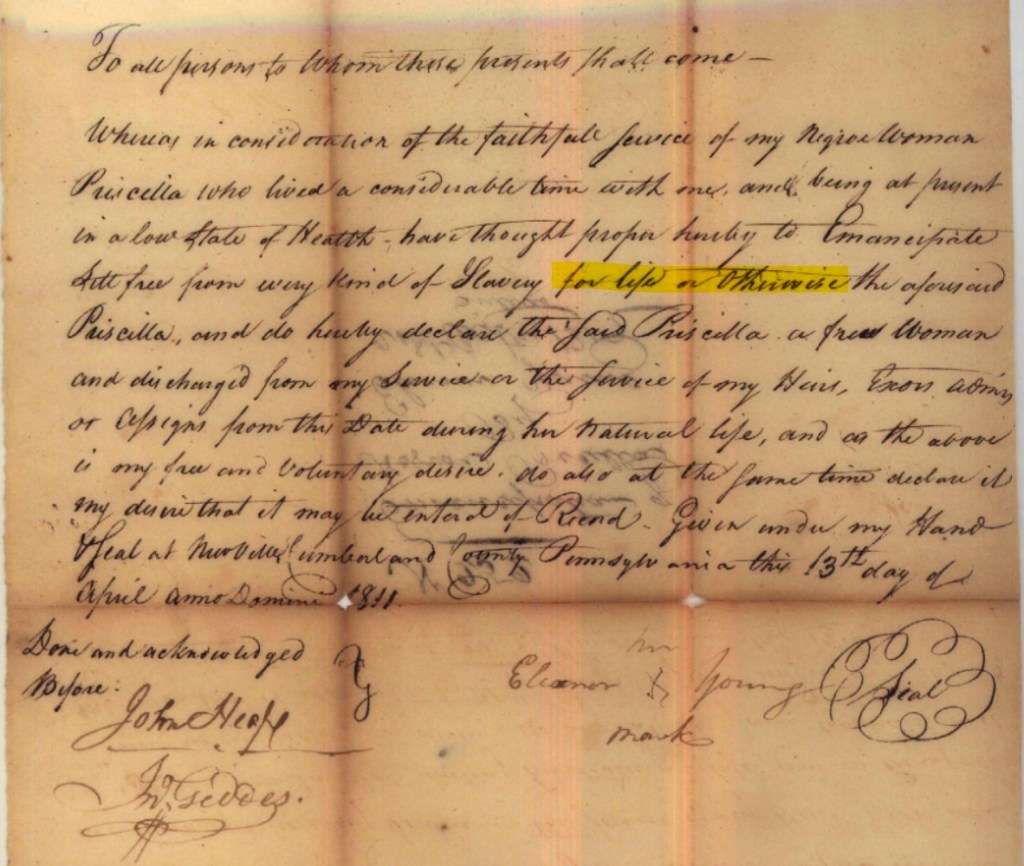
for life or otherwise
county slave registrations
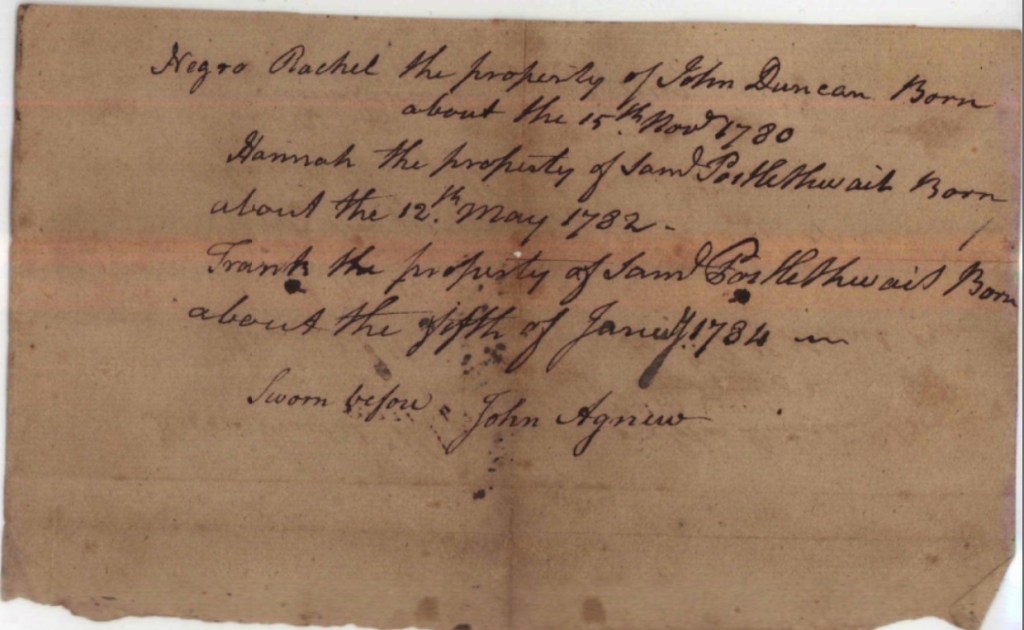
On March 27, 1789, John Duncan and his father-in-law, Samuel Postlethwaite, registered three Black children as their property with the Cumberland County clerk of courts. Rachel, Hannah, and Frank were all born after March 1, 1780, and were therefore held as statutory term slaves.
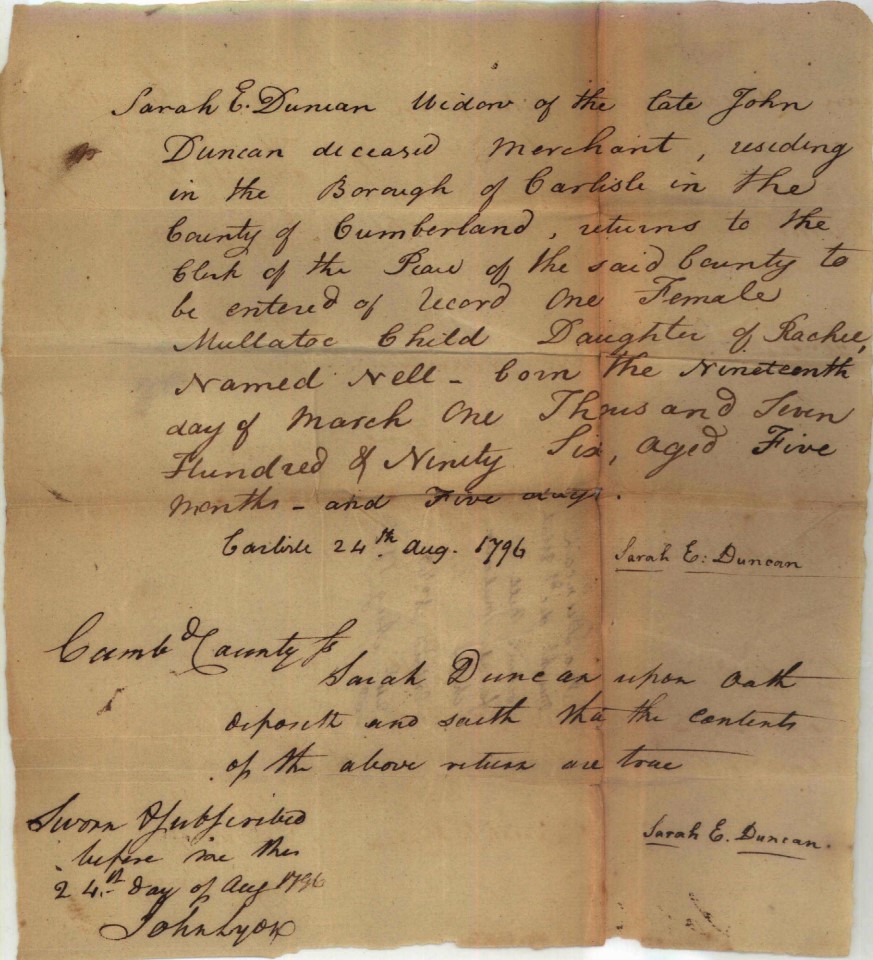
On August 24, 1796, John Duncan’s widow, Sarah, registered Rachel’s daughter, Nell, as the property of the Duncan estate. Rachel was not a lifetime slave, but rather a statutory term slave. This registration document made her daughter into a hereditary term slave, a practice that remained legal in Pennsylvania until 1826.
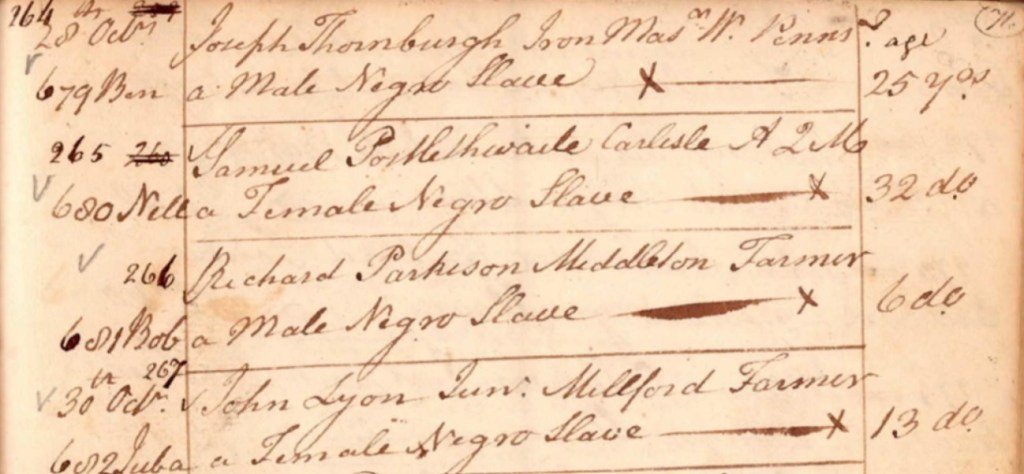
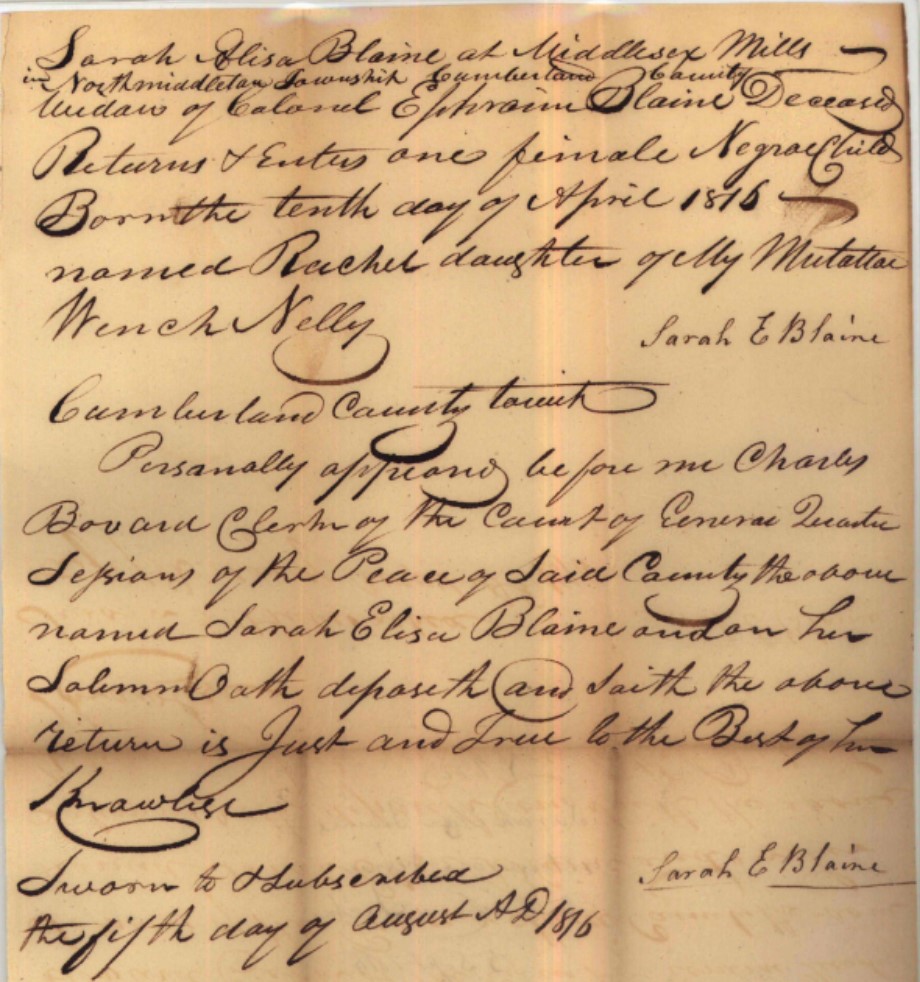
This is the clerk’s record of Samuel Postlethwaite’s 1780 registration of Nell as a lifetime slave. The original registration document has not survived.On April 10, 1816, Sarah Blaine, having remarried after the death of John Duncan, registered Nell’s daughter, Rachel, as a second-generation hereditary term slave. Between 1789 and 1816, the Duncan family registered three generations of women–Rachel, Nell, and Rachel–as their property. All three had been born after gradual abolition took effect on March 1, 1780.
deeds of manumission
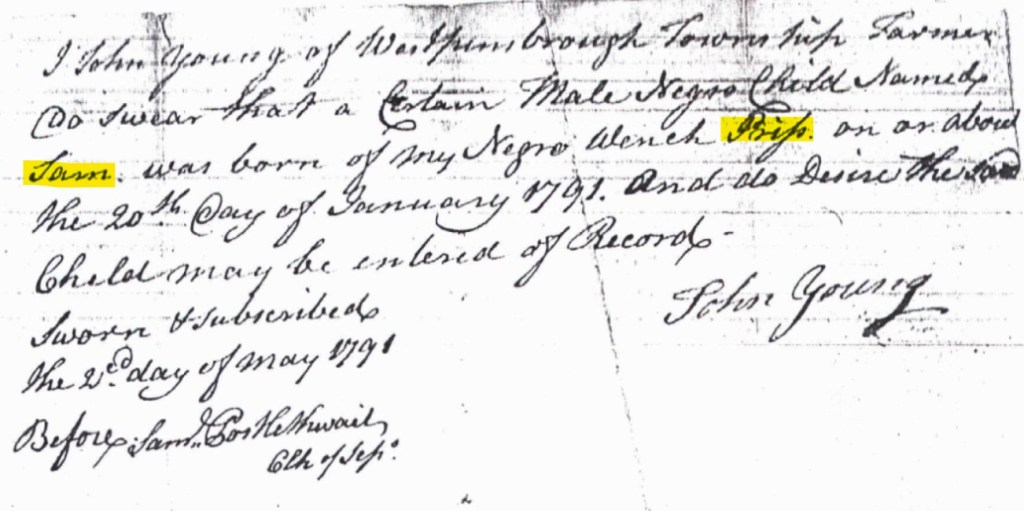
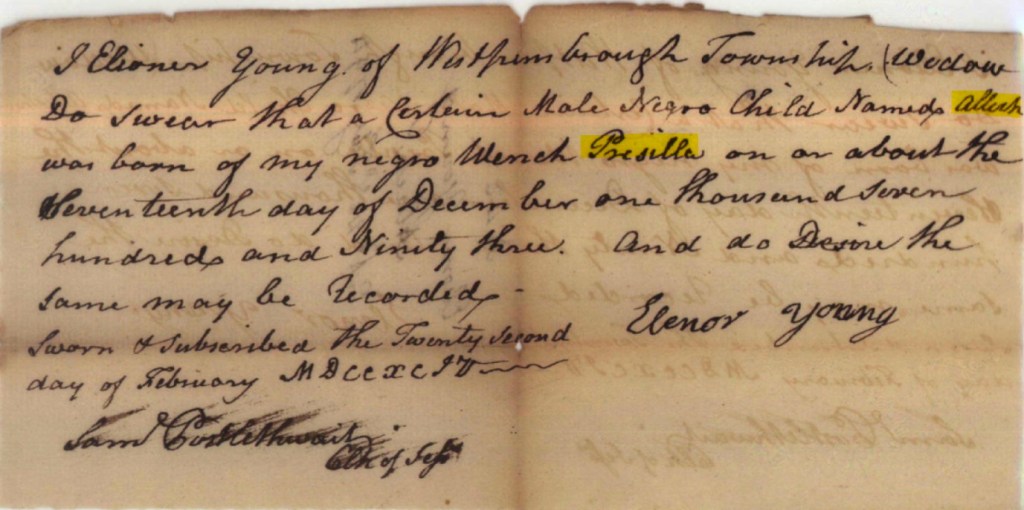
On April 13, 1811, Eleanor Young manumitted a forty-seven-year-old woman named Priscilla from “every kind of Slavery for life or Otherwise.” Eleanor and Priscilla were both intimately familiar with “slavery for otherwise,” since the Youngs had registered Priscilla’s two sons, Sam and Alleck, as their property.
On May 2, 1791, John Young registered Priscilla’s son, Sam, as a statutory term slave. John died the following year.
On February 22, 1794, Eleanor Young, now a widow, registered Priscilla’s son, Alleck, as a statutory term slave.
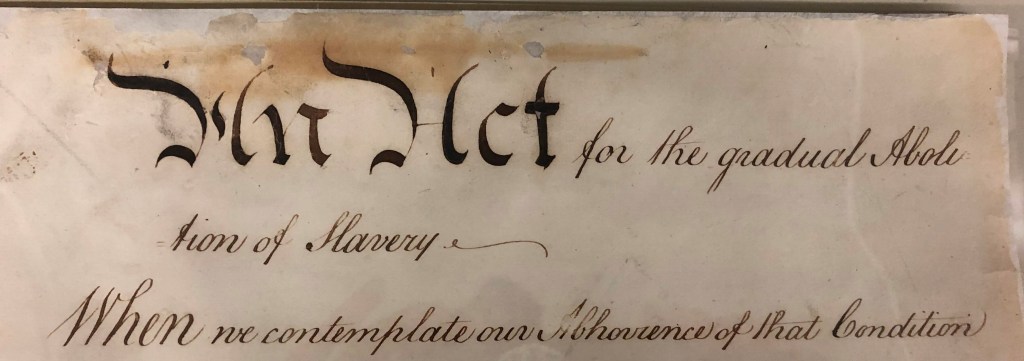
an act for the gradual aboli – tion of slavery
The engrossed copy of the act divides the word “abolition” in two, symbolizing its own limitations.


 Cory James Young's Website